When to Call a Home Doctor in Gurgaon
One of the most common moments of uncertainty for any family is the late-night health question: is this serious enough to act on right now, or can it wait until morning? In Gurgaon, where getting to a hospital can mean a 20–40 minute drive through traffic — or an auto that may not come at 2 AM — that decision carries real weight. This guide is here to help you think it through.
Symptoms That Usually Warrant a Doctor Visit at Home
A home doctor visit is appropriate when a person needs medical assessment, guidance, or treatment but the condition is not immediately life-threatening. The following are situations where calling a doctor to your home in Gurgaon makes clear sense:
- Fever above 101°F lasting more than a few hours — especially in children under 5, adults over 65, or anyone with a pre-existing condition. Fever that doesn't respond to paracetamol within 2–3 hours also warrants a call.
- Persistent vomiting or diarrhoea — particularly if the person is struggling to keep fluids down or showing signs of dehydration (dry mouth, no urination, dizziness when standing).
- Breathlessness that is new or worsening — not severe or sudden, but noticeable. A doctor can assess whether this needs further investigation or can be managed at home.
- Severe body ache and fatigue with fever — a presentation that often signals viral illness and can be assessed and treated at home with the right prescription.
- Sudden giddiness or weakness in an elderly person — especially if they have a history of blood pressure or heart issues. These symptoms need a medical assessment before drawing any conclusions.
- Post-hospitalisation follow-up — if you or a family member has been discharged from Medanta, Fortis, or another hospital and needs a wound dressing, medication review, or monitoring visit within the first week.
Signs That Can Usually Wait Until Morning
Not every health concern needs a doctor at midnight. These can generally wait for a daytime appointment or OPD visit:
- Mild fever (below 100°F) in an otherwise healthy adult with no other symptoms
- A minor cut or scrape that has stopped bleeding and is not deep
- Mild cold or nasal congestion with no fever or breathlessness
- Mild stomach discomfort or bloating that is not accompanied by vomiting, fever, or severe pain
When in doubt, calling to describe the symptoms — even without booking a visit — can help you decide.
When to Go Directly to a Hospital
A home doctor visit is not right for every situation. Go directly to a hospital — or call an ambulance — if you see any of the following:
- Loss of consciousness or inability to wake someone up
- Severe chest pain or pressure, especially with sweating or left arm pain
- Sudden facial drooping, arm weakness, or slurred speech (possible stroke)
- Severe difficulty breathing — unable to complete a sentence, lips turning blue
- A seizure in someone who has not had one before
- Major trauma — deep wounds, fractures, head injury with confusion
- Severe allergic reaction with swelling of the face, tongue, or throat
These situations need immediate hospital-level intervention. Do not wait for a home visit — call an ambulance or get to the nearest casualty department immediately.
Why Gurgaon Families Are Increasingly Choosing Home Visits
The rise of doctor home visits in Gurgaon reflects something real: for many conditions, the home is simply a better place to receive care. There is no auto to hail at midnight. No waiting room. No risk of the patient sitting next to others who are unwell. And for elderly residents in DLF Phase 1, Sushant Lok, or Sector 14, the physical effort of travelling to a facility for a routine or acute check can be genuinely exhausting — or simply impossible without family help.
A home visit also means the doctor sees the patient in their actual environment — their medications are there, their family is there, and the anxiety of a new place is absent. For elderly patients especially, this matters enormously for the quality of the assessment.
What Happens During a GurgaonCare Home Visit
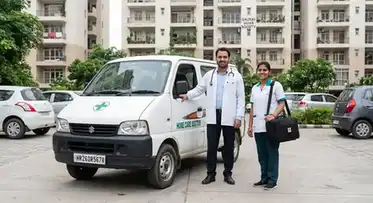
When you call or WhatsApp GurgaonCare, you share the patient's location and a brief description of the symptoms. Our van is dispatched and the doctor typically arrives within 45–60 minutes. The doctor carries a portable examination kit — stethoscope, BP monitor, pulse oximeter, thermometer, and a stock of commonly needed medications.
The doctor takes a history, examines the patient, and explains what they found. They will prescribe where appropriate, advise on what to watch for, and tell you clearly whether further investigation or a hospital visit is needed. The visit ends with a prescription in hand and a clear picture of what to do next.
The fee is ₹1,499 flat — settled by UPI, cash, or card after the visit. No advance, no booking fee. If you'd like to arrange a visit, book here or call directly.